
The Uncharted Past
Source of the Week
Unpack this Week's Source
Every week, we uncover a fascinating historical source and explore what it reveals about the people, events and experiences of the past.
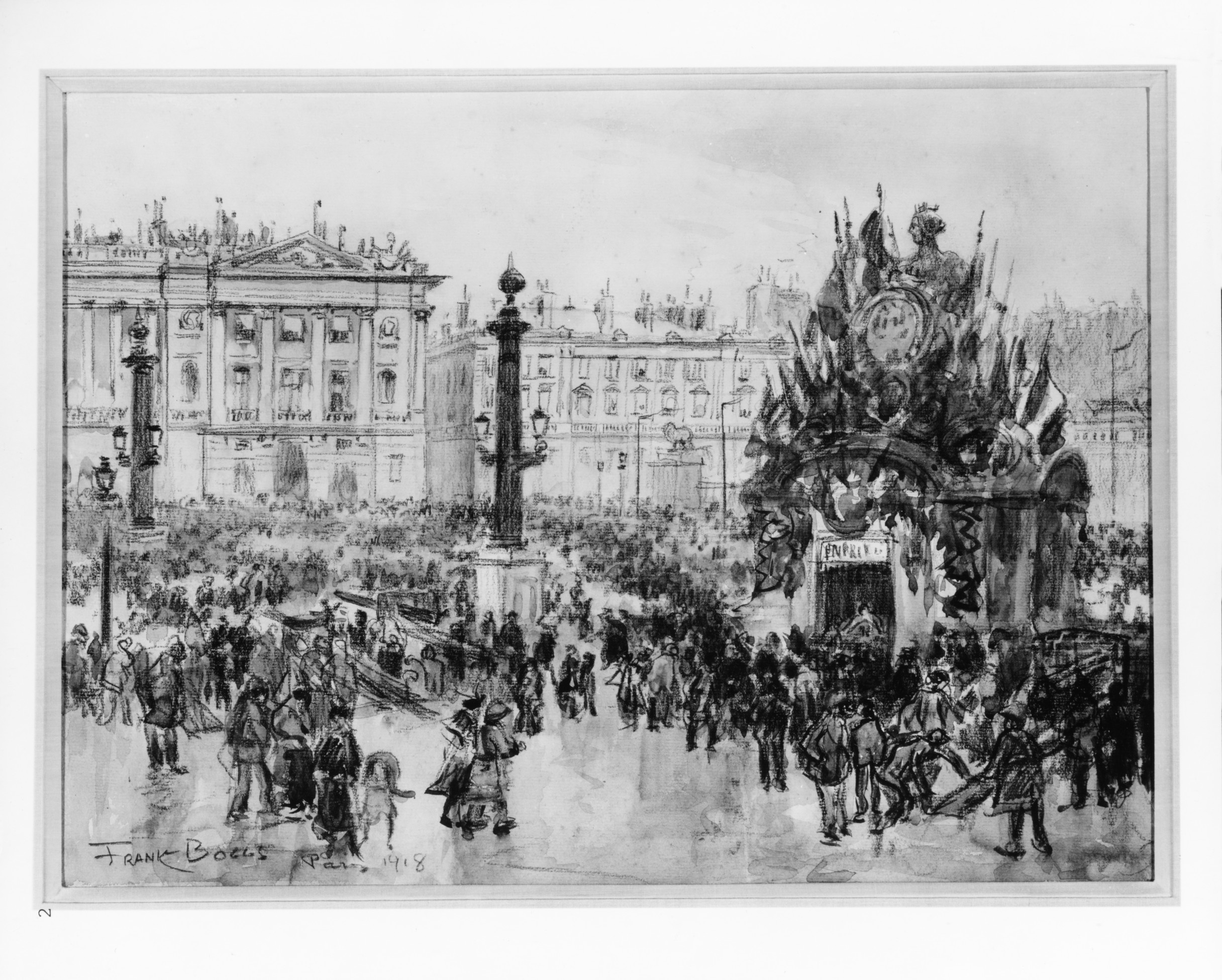
11 November 1918: What Did Peace Look Like?
THE UNCHARTED PAST | SOURCE OF THE WEEK
On 11 November 1918, the guns fell silent on the Western Front following four years of devastating warfare. Across Europe, news of the Armistice prompted extraordinary scenes of public celebration.
This contemporary artwork by Frank Myers Boggs captures the crowds assembled in Paris as news of the Armistice spread.
Yet this image raises important questions about how we understand the past. While the artwork portrays a moment of collective celebration, millions of families across Europe were mourning the loss of loved ones.
What can this source tell us about the emotional atmosphere of November 1918 — and what might it conceal?
Have your say!
- What does the artist's depiction of the crowd suggest about public reactions to the Armistice?
- How reliable is an artist's interpretation as evidence of a historical event?
- Whose experiences of November 1918 are absent from this picture?
- Was 11 November 1918 a moment of peace, victory, relief, or something more complicated?
Reference:
Frank Myers Boggs, Armistice Day, Paris (1918), watercolour and chalk on laid paper, 33.3 × 46.5 cm, The Metropolitan Museum of Art, New York, accession no. 1971.248, https://www.metmuseum.org/art/collection/search/10197 (accessed 11 November 2026).
Image Credit: Frank Myers Boggs, Armistice Day, Paris (1918). The Metropolitan Museum of Art, New York.
Copyright and Licensing: Public Domain – CC0 1.0 Universal. This image has been made available through The Metropolitan Museum of Art's Open Access initiative and may be reproduced, shared and adapted, including for commercial purposes, without seeking additional copyright permission.
Image Source: https://commons.wikimedia.org/wiki/File:Armistice_Day,_Paris_MET_197226.jpg
 English