
This blog explores the remarkable paradox of William, Prince of Orange, who fought against Napoleon at Waterloo but subsequently became entangled with liberal and Bonapartist conspirators seeking to overthrow the Bourbon monarchy. Drawing on diplomatic correspondence and historical research, it examines the prince’s revolutionary ambitions, his controversial connections in Brussels, and the efforts of Wellington and Tsar Alexander I to restrain him. His story reveals the tensions and contradictions within Europe’s post-Napoleonic political order.
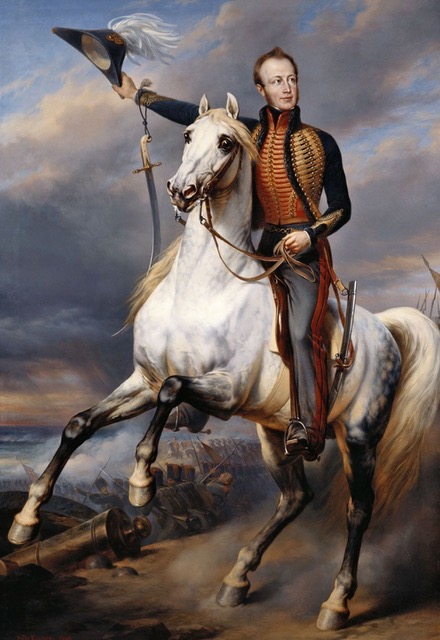
How did William of Orange, a hero of Waterloo and future King of the Netherlands, become involved with men plotting against the European order he had helped establish?
In June 1815, William, Prince of Orange, fought alongside the Duke of Wellington against Napoleon Bonaparte at Waterloo. The young prince was wounded during the battle and emerged as one of the celebrated figures of the Allied victory. Yet within a few years, his name was circulating among French revolutionaries and Bonapartists who hoped to overthrow the restored Bourbon monarchy. Even more remarkably, some considered placing William himself on the French throne.
The contradiction was extraordinary. The heir to a kingdom created to contain French expansion was associating with men who sought to overturn the political settlement established after Napoleon’s defeat. His father, King William I, and powerful figures including Wellington and Tsar Alexander I would repeatedly attempt to restrain him. Was the Prince of Orange a genuine revolutionary sympathiser, an ambitious young aristocrat, or simply a useful figure whose reputation was exploited by political conspirators?
A Hero of Waterloo in a Divided Kingdom
The defeat of Napoleon transformed the political landscape of Europe. At the Congress of Vienna, the victorious powers established a new territorial order intended to prevent another period of revolutionary warfare and French expansion. One of its most important creations was the United Kingdom of the Netherlands. Under King William I, the former Dutch Republic was united with the territories of present-day Belgium, creating a stronger state along France’s northern frontier. The new kingdom nevertheless faced considerable internal tensions. The southern provinces had experienced two decades of French rule, and many inhabitants had served in Napoleon’s administration or armies. The restored European order could not simply erase these connections. William I consequently adopted a relatively pragmatic approach towards former servants of the French Empire. Rather than systematically excluding them from public life, he attempted to incorporate them into the new monarchy.
His eldest son, however, presented a different challenge. Born in 1792, Prince William had spent much of his youth abroad and developed a distinguished military career. He served under Wellington during the Peninsular War and subsequently participated in the campaign that culminated at Waterloo. His military reputation made him an important asset to the new dynasty, particularly in the southern provinces, where royal legitimacy remained uncertain. However, the prince’s popularity and ambition also contributed to tensions with his father. William increasingly sought an independent political role, and Brussels offered him opportunities that the royal court could not.
Brussels: A Refuge for Napoleon’s Former Supporters
Following Napoleon’s final defeat in 1815, the restored French monarchy pursued opponents associated with the Revolution and the Empire. Numerous former officials, military officers and political figures consequently sought refuge abroad. Brussels became one of their principal destinations. Among the exiles were prominent figures such as Emmanuel Joseph Sieyès, Jacques-Louis David and Jean-Jacques-Régis de Cambacérès, alongside former Napoleonic generals and political journalists. The city’s proximity to France made it particularly attractive to those who remained hostile to Louis XVIII. Not all refugees were conspirators. Many sought security after years of political upheaval. Others, however, maintained opposition networks, published anti-Bourbon newspapers and entertained schemes for regime change. Their activities alarmed the European powers. Austrian Chancellor Metternich regarded Brussels as a potential centre of revolutionary agitation, while Allied diplomats pressured the Dutch government to restrict the refugees’ activities.
King William I resisted indiscriminate repression. His government had to maintain stability in the southern provinces, where hostility towards former Napoleonic officials might provoke further divisions. It was in this politically sensitive environment that the Prince of Orange developed his own connections. William frequented Brussels salons attended by former imperial officers, political exiles and members of the local aristocracy. His social circle included Lord Kinnaird, a Scottish aristocrat associated with British liberalism and suspected Bonapartist sympathies. A British informant reported that Kinnaird’s residence attracted numerous supporters of Napoleon.
The prince’s presence among these circles was not necessarily evidence of conspiracy. Brussels society brought together people with different political loyalties, and social relationships frequently crossed ideological boundaries. Nevertheless, William’s political outlook appears to have changed. His encounters with Napoleon’s former supporters encouraged a more favourable assessment of the defeated emperor. William increasingly admired Napoleon’s military achievements, while his dissatisfaction with his father’s government and the Bourbon monarchy strengthened his attraction to liberal opposition. His grandmother Wilhelmina reportedly warned against her grandson becoming a ‘little Bonaparte’.
Could Napoleon’s Enemies Place William on the French Throne?
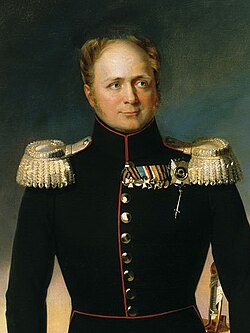
During the spring of 1816, William’s name appeared in correspondence involving Lazare Carnot, the former revolutionary statesman and Napoleonic minister. In letters dated 14 April and 2 June, correspondents discussed possible alternatives to the restored Bourbon dynasty. Napoleon’s young son remained an obvious candidate for Bonapartist supporters. Yet he was a child, living under Austrian supervision, and his restoration appeared difficult to accomplish.
The Prince of Orange offered another and perhaps more realistic possibility. William possessed military prestige, dynastic legitimacy and connections with the European powers. He was also an adult prince who could potentially be presented as a liberal alternative to Louis XVIII. One correspondent suggested that he was attracting supporters and might prove a more practical candidate than Napoleon II. This was a striking development. The son of the Dutch king was being considered as a possible ruler of France by men opposed to the very settlement that had secured his family’s position.
The surviving correspondence does not establish that William initiated the proposal. His biographer Jeroen van Zanten nevertheless records that Carnot established contact with the prince, while rumours circulated about his willingness to support the Bonapartists. The situation became increasingly embarrassing for the Dutch monarchy. In June 1816, Wellington warned William I about committed Bonapartists in Brussels whom he believed were conspiring to renew Europe’s troubles. The prince’s political associations were no longer merely a domestic family matter. They threatened to create a diplomatic crisis involving France, the Netherlands and the victorious Allied powers.
A Revolutionary Prince and His Imperial Brother-in-Law
William’s position became even more complex because of his marriage. In February 1816, he married Grand Duchess Anna Pavlovna, sister of Tsar Alexander I of Russia. The marriage placed him within one of Europe’s most powerful ruling families. Alexander had played a central role in Napoleon’s defeat and the construction of the post-war order. Yet the tsar soon found himself confronted with the political ambitions of his new brother-in-law.
In January 1817, William discussed the situation in France with Alexander. He acknowledged that his name had circulated among potential alternatives to the Bourbons, alongside Napoleon II and the Duke of Orléans. The prince also attempted to persuade the tsar that dissatisfaction with the French monarchy was widespread. A month later, William reported that conspirators intended to approach Alexander through Carnot, bringing documents supposedly demonstrating French support for political change. Alexander was unimpressed. According to William’s account, the tsar made clear that determining France’s political future was not the responsibility of the Prince of Orange. William subsequently claimed to have abandoned the intrigues. His behavior nevertheless remained ambiguous. He presented himself as someone informing the tsar about revolutionary schemes, while simultaneously repeating arguments that justified opposition to the Bourbon monarchy. Foreign diplomats struggled to determine whether William was actively participating in conspiracies or merely allowing ambitious political opponents to exploit his reputation.
Wellington’s Warnings and a Failed Assassination
The prince’s associations continued to attract suspicion during 1817. Diplomatic reports described his presence in Brussels salons frequented by former Napoleonic officers and aristocrats sympathetic to the Empire. His involvement became particularly controversial following disturbances surrounding the Paris premiere of Antoine-Vincent Arnault’s Germanicus in March 1817. The play provoked clashes between royalists and opponents of the Bourbon monarchy. Arnault had connections in Brussels and enjoyed William’s protection, while French authorities reportedly discovered correspondence linking the prince to someone involved in the disturbances. The Dutch representative in Paris, Robert Fagel, warned that William risked compromising his entire family. Wellington subsequently travelled to Brussels to confront the prince personally. The episode illustrated the extraordinary difficulty of managing him. Ordinary political exiles could be monitored, expelled or prosecuted. The heir to the Dutch throne, however, enjoyed protections arising from his dynastic position and powerful personal relationships.
Then, in February 1818, the situation became considerably more serious. On 11 February, Marie-André-Nicolas Cantillon, a former soldier of Napoleon’s Imperial Guard, attempted to assassinate Wellington in Paris. The attack failed, but investigations once again led towards the Southern Netherlands. British diplomatic reports associated the conspiracy with a Brussels circle surrounding Madame Regnault de Saint-Jean d’Angély, whose members were described as devoted supporters of Napoleon.
William had frequented the same social environment and knew two Napoleonic veterans suspected of involvement. Fagel even believed that the prince had been aware of the conspiracy. There was, however, no conclusive evidence that William had participated in the assassination attempt. Wellington himself refused to believe the allegations. In a letter to William dated 18 April 1818, the duke defended the prince against suspicion, declaring that he would as readily suspect his own son. Yet Wellington also urged him to abandon the compromising associations that had repeatedly placed him in danger. The affair seriously damaged the political environment in which William had operated. Dutch authorities tightened measures against suspected conspirators, while many French exiles gradually returned home as conditions in France changed. For a time, the prince appeared to have learned his lesson.
The Prince Who Still Dreamed of Revolution
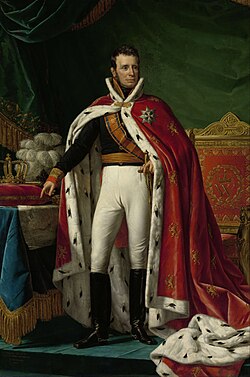
The disappearance of the Brussels exile networks did not end William’s ambitions. In 1819 and 1820, the prince again became associated with schemes to overthrow the Bourbons. His deteriorating relationship with his father and growing sympathy for liberal political ideas contributed to his continued dissatisfaction. The assassination of the Duke of Berry, a prominent member of the French royal family, in February 1820 intensified political tensions in France. Revolutionary plots multiplied, and William’s name resurfaced among potential replacements for the ruling dynasty. The situation escalated when French authorities received reports of conversations between William and an individual acting as an informant. According to the allegations, the prince suggested that he could provoke a revolution in Paris simply by crossing the French frontier with several Belgian regiments. The claims alarmed the French government. The Dutch representative in Paris was summoned, and the Dutch government was compelled to withdraw military units stationed near the frontier. William again denied the accusations. Nevertheless, he subsequently travelled to Russia and sought Alexander’s support for an extraordinary proposal: the southern provinces of the Netherlands might be united with France under William’s leadership. Alexander rejected the scheme and advised his brother-in-law against pursuing it.
This episode went far beyond the indiscretions of a young prince attending questionable social gatherings. William was contemplating a political transformation that threatened the European territorial settlement established after Napoleon’s defeat. His own retrospective writings provide particularly revealing evidence. In autobiographical notes written in 1821, William acknowledged that he had considered intervening in France because he believed the country was oppressed by the Bourbons. He imagined himself contributing to the happiness of the French nation and later lamented the failure of a conspiracy that, in his view, might have served the interests of France and Europe. These reflections make it difficult to dismiss every allegation surrounding the prince as the product of exaggerated diplomatic fears. His precise political convictions remain difficult to classify. Yet his ambitions clearly extended beyond social sympathy for Napoleon’s former supporters.
From Revolutionary Dreamer to King of the Netherlands
By 1821, William’s involvement in political intrigue was diminishing. Repeated controversies, personal difficulties and the failure of successive schemes encouraged him to reconsider his position. During the winter of 1821–1822, he reconciled with his father and increasingly accepted his future responsibilities as heir to the Dutch throne. However, his story did not end there. In 1830, the Belgian Revolution divided the United Kingdom of the Netherlands. William eventually succeeded his father as King William II in 1840, ruling until his death in 1849. His earlier political adventures reveal a remarkable contradiction at the heart of post-Napoleonic Europe. The Prince of Orange had helped defeat Napoleon, yet subsequently developed relationships with men who wished to overturn the political settlement created by that victory.
He was neither a conventional Bonapartist nor simply an innocent victim of revolutionary intrigue. His actions reflected a combination of personal ambition, political dissatisfaction and an attraction to alternative futures for France. The response of Europe’s rulers was equally revealing. Alexander, Wellington and William I repeatedly sought to restrain him through personal relationships rather than public punishment. The prince’s dynastic connections both protected him and made his behaviour unusually dangerous. Ultimately, William’s retreat from revolutionary politics did not result from a dramatic confrontation or an international trial. It came through the gradual abandonment of his ambitions and his acceptance of the monarchy he was destined to inherit. For several years, however, one of Waterloo’s celebrated victors had been tempted by the possibility of overturning the very European order his victory had helped create.
Bibliography
Primary Sources
Colenbrander, H. T., ed. Gedenkstukken der algemeene geschiedenis van Nederland van 1795 tot 1840. Series 1815–1825, vols. I–II. ’s-Gravenhage: Martinus Nijhoff, 1915–1916.
Secondary Literature
De Graaf, Beatrice. Tegen de terreur: Hoe Europa veilig werd na Napoleon. Amsterdam: Prometheus, 2019.
De Haan, Ido, and Jeroen van Zanten. ‘Constructing an International Conspiracy: Revolutionary Concertation and Police Networks in the European Restoration’. In Securing Europe after Napoleon: 1815 and the New European Security Culture, edited by Beatrice de Graaf. Cambridge: Cambridge University Press, 2019.
Koch, Jeroen. Oranje in revolutie en oorlog: Een Europese geschiedenis 1772–1890. Amsterdam: Boom, 2018.
Lemmens, Wim. ‘Het ontluikend liberalisme: Franse migranten, hun netwerken en journalistieke activiteiten in de Zuidelijke Nederlanden (1815–1820)’. Revue belge de philologie et d’histoire 89 (2011).
Van Zanten, Jeroen. Koning Willem II: 1792–1849. Amsterdam: Boom, 2013.
 English